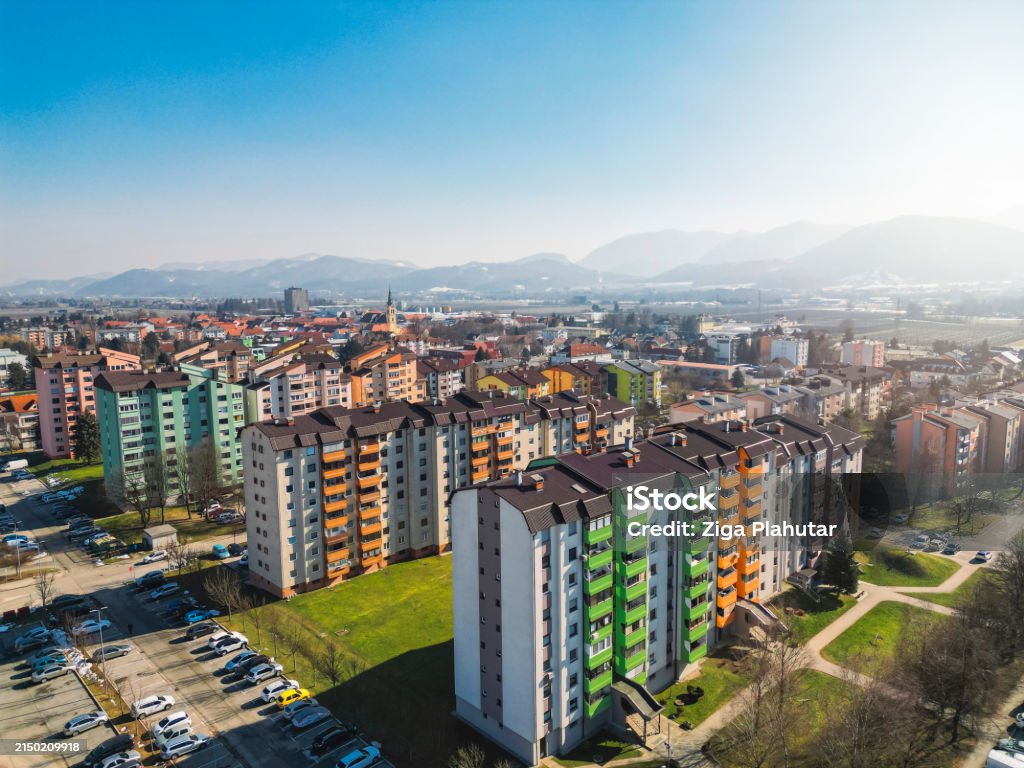
Emerging Consumer Cities Investment: Where Smart Capital Is Moving Next
For decades, the default strategy for property investment was simple: buy in the most prestigious districts of major global cities. Today, however, emerging consumer cities' investment is reshaping how capital is deployed. Investors are shifting focus toward secondary cities and new urban hubs where rising incomes, population growth, and expanding consumer demand are creating stronger long-term fundamentals.
That logic is being rewritten.
Today, sophisticated capital is flowing into a different category of opportunity: emerging consumer cities. These are not the established capitals, but the secondary cities and new urban hubs where demographic growth, rising disposable income, and expanding retail demand are creating powerful new investment fundamentals.
For investors asking where to deploy capital in the next decade, the answer increasingly lies in understanding spending density, not just city branding.
The Shift from Prestige to Fundamentals
The traditional appeal of trophy locations is understandable. They offer familiarity and perceived safety. But they also offer saturated markets, compressed yields, and limited upside. The real growth story is happening elsewhere.
Across Asia and the Middle East, economic expansion is being driven by secondary cities. These are locations that may lack the global recognition of a Dubai or a Singapore, but possess something more valuable: rapidly improving household incomes and a concentration of consumer demand that is outpacing supply.
This shift is fundamentally demographic. When a city's population of working-age adults grows steadily, and when those adults see their disposable income rise year after year, they generate consumption. They need housing, retail spaces, and leisure facilities. They create spending density.
Understanding Spending Density
Spending density is a concept that matters more than any prestige address. It refers to the concentration of purchasing power within a specific geographic area. A single square kilometer in a top-tier capital may have high spending density, but the entry cost to access it is prohibitive, and the competition is intense.
In an emerging consumer city, the calculation is different. You are investing in the early stages of a density curve. As new residents arrive and incomes rise, the spending per square kilometer increases rapidly. The investor who enters before this curve steepens captures the value creation, rather than buying into it after it has matured.
Consider the growth corridors around major metropolitan areas. In the UAE, for example, while Dubai remains the gravitational center, the districts on its periphery and emerging urban hubs in other emirates are capturing the overflow of demographic and economic energy. These locations benefit from the prestige of the region while offering expansion space that the core cannot.
Demand Concentration Beats City Branding
One of the most common mistakes investors make is falling in love with a city's name rather than its numbers. A famous city can have stagnant demographics and declining real incomes. An unknown city can have explosive growth. This is where demand concentration becomes the critical metric. You are looking for locations where multiple demand drivers converge:
Demographic Momentum. Is the population growing because of migration, because of a young demographic profile, or because of urbanization from rural areas? Population growth is the foundation of all future demand.
Income Trajectory. Are real wages rising? Is the local economy diversifying beyond a single industry? Rising incomes transform population into purchasing power. Retail and Commercial Expansion. Are international brands opening outlets? Are modern retail formats appearing? Consumer goods companies conduct expensive research before entering a market. Their presence is a powerful signal of underlying consumption potential.
When these three factors align in a single city or district, you have demand concentration. The location may lack the brand recognition of a global city today, but its consumption fundamentals are building the brand of tomorrow.
The Asian Growth Engine
Asia remains the epicenter of this phenomenon. While attention focuses on the established capitals, the real economic expansion, as tracked by development banks and economic institutions, is occurring in a network of secondary cities stretching from Vietnam to Indonesia.
These cities are not just manufacturing centers anymore. They are becoming consumer markets in their own right. A rising middle class in these locations wants the same quality of housing and retail that their counterparts in the capital cities enjoy. The supply of modern, professionally managed property to meet this demand is often limited, creating a window of opportunity for early investors.
The key is to identify which cities have the infrastructure investment to support population growth. New highways, mass transit systems, and utility expansions are reliable indicators that a city is preparing for its next phase of expansion.
Mitigating Risk in Emerging Markets
Investing in emerging consumer cities requires a different risk framework than investing in established markets. The upside is higher, but the due diligence must be deeper.
The primary risk mitigation strategy is granularity. You are not investing in "Vietnam" or "Indonesia" as a whole. You are investing in a specific district of a specific city where you can verify the demand concentration on the ground.
Look for micro-markets where residential construction is being absorbed quickly, where rental yields are stable or improving, and where commercial vacancies are low. These are tangible indicators that the local economy is functioning. They matter more than national macroeconomic statistics.
Another critical factor is the alignment of development with infrastructure. The most successful investments in emerging consumer cities are often those positioned along new transport corridors or near planned commercial hubs. You are essentially investing ahead of the curve, but with a clear catalyst in sight.
The New Geography of Opportunity
For property consultants advising clients today, the conversation must evolve. The question is no longer just "Which city?" but "Which emerging corridor within which growth market?" Clients who insist on prestige locations will find safety, but they will pay for it in compressed returns. Clients who understand the power of demographic driven investment and spending density will find the opportunities that others overlook.
The cities winning this investment are not necessarily the ones with the best marketing. They are the ones with the best fundamentals: growing populations, rising incomes, and concentrated demand. They are the emerging consumer cities where the next decade of wealth creation is already beginning.
As you evaluate opportunities for your portfolio, resist the allure of familiar names. Look instead for the places where the numbers tell a story of expansion. The brand value will follow the fundamentals. It always does. Ultimately, emerging consumer cities investment represents a shift toward fundamentals-driven growth, where demographics and consumption patterns define long-term value.