Exclusive Commercial Space: Upgrading Neighborhood Shops
The Quiet Opportunity Sitting in Plain Sight
Exclusive commercial space is no longer limited to premium shopping districts or large urban developments. In many residential areas across Jakarta, Surabaya, and Bandung, overlooked ground-floor units are quietly emerging as opportunities for thoughtful commercial transformation. What may appear to be an ordinary neighborhood shop can, with the right business concept, design approach, and operational strategy, become a refined destination that enhances both rental income and the overall perception of the surrounding community. The challenge is not simply converting residential units into commercial use, but doing so in a way that preserves the residential character while elevating the value of the area.
But with the right approach, they can become something entirely different. The right business in the right space does not just generate rental income, it can elevate the perception of an entire neighborhood. The question is not whether to convert these spaces. The question is how to do it without disrupting the residential character that makes the area worth being in.
Indonesia Already Has a Blueprint: Senopati and Kemang
Both Senopati and Kemang show how an exclusive commercial space can elevate a residential district into a sought-after lifestyle destination.
Over the past decade, Senopati Street has undergone a remarkable transformation. What was once a relatively quiet and residential area is now brimming with high-end restaurants, artisanal cafes, rooftop bars, and boutique shops, earning a reputation as one of Jakarta's most vibrant lifestyle districts. The Senopati area in Kebayoran Baru was originally a residential zone, and in recent years, many restaurants and commercial activities have taken root, driven by its proximity to office and residential areas that made it a natural gathering point.
The result? Senopati is now often called the "SoHo of Jakarta," attracting young professionals, affluent locals, and expatriates with its mix of boutique cafés, rooftop lounges, and stylish restaurants.
Kemang tells a similar story. Originally a residential area for expatriates, Kemang began its transformation in the late 1970s and 1980s when restaurants, art shops, and international schools started setting up, attracting a diverse crowd. Today, small independent coffee shops and specialty roasters thrive there, making it a favorite for those who enjoy unique blends and cozy atmospheres, while luxury villas sit comfortably alongside trendy cafés and art galleries.
Neither area lost its residential identity in the process. Both became more desirable and more valuable because of what moved in.
The First Decision: Choosing the Right Business
Before thinking about design or permits, the type of business needs to be right. It sets the tone before anyone even walks through the door.
The best fits for a residential-to-exclusive conversion tend to be businesses that serve the local community but feel elevated enough to draw visitors from beyond the neighborhood. A specialty café, a boutique wellness studio, a curated concept store, or an artisan food retailer all work well in this context. They create a reason to visit without generating the kind of noise, traffic, or transactional energy that disrupts the surrounding area.
What does not work is equally important. High-footfall, transactional businesses, convenience stores, fast food outlets, and print shops actively undermine the exclusive feel. The goal is a space that residents are proud to have nearby, not one they merely tolerate.
Design: The Fastest Signal of Value
Even a small, modestly sized space can feel premium. What communicates exclusivity is not square footage, it is intention.
The principles are straightforward. Material choices matter more than most people realize: natural stone, timber, brushed metal, and textured surfaces read as considered and quality-driven in a way that laminate and plastic simply do not. The lighting should be warm and layered. Harsh overhead fluorescents are the fastest way to cheapen a space, regardless of what else is in it.
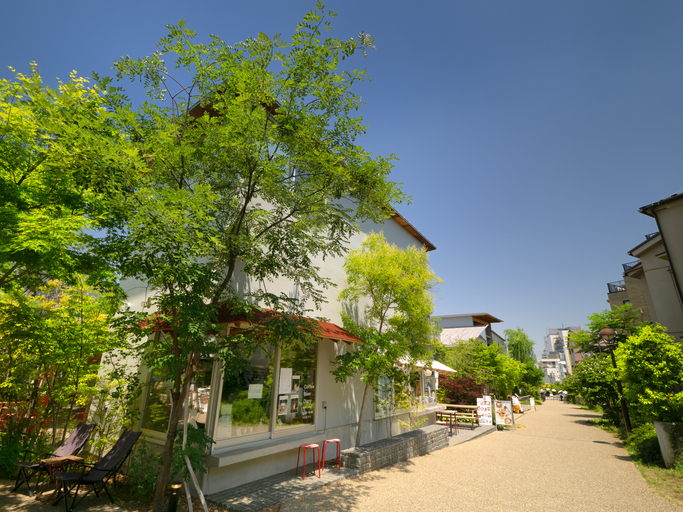
A compact coffee shop in Indonesia, MKO Culture, built in just 20 square meters in the front yard of a residential property, demonstrated how strong architectural thinking and material choice can create a space that feels distinctive and inviting regardless of its size. The design used a greenhouse-inspired curved roof and carefully selected materials to punch well above its physical footprint.
Less is consistently more. A curated, uncluttered space reads as higher value than one packed with products and signage. Scent, music, the quality of the seating, even the texture of packaging, these details accumulate into a feeling that customers recognize but may not be able to articulate. That feeling is what keeps them coming back.
The design should also acknowledge its surroundings. Think of the space not as a retail unit dropped into a neighborhood, but as a living room that happens to be a business. It should feel like it belongs there.
Zoning and Permits: Check Before You Build
In Indonesia, the good news is that the ruko (rumah toko) format already creates a legal bridge between residential and commercial use. Mixed-use zoning in many suburban township developments allows ground-floor units to operate commercially without requiring a full rezoning process. That said, requirements vary significantly by city and district, and certain business types, those involving food production, amplified sound, or late-night operations, may need additional permits.
Working within these constraints is not necessarily a disadvantage. A space that operates under thoughtful limitations (limited seating, quiet hours, no large signage) often ends up feeling more exclusive simply because of those constraints. Scarcity and control are central to the psychology of exclusivity.
Creating Exclusivity Through Experience, Not Just Aesthetics
Exclusivity does not have to mean expensive. It means controlled and intentional.
Limited seating models naturally create a sense of value, when a café has only twelve tables, getting one feels like something. Appointment-based services, rotating menus, members-only access to products or events, and private gatherings for regulars all build a sense of belonging that transactional retail simply cannot replicate.
The small gestures matter enormously here. Remembering a regular's order. Handwritten packaging. A greeting that treats visitors as guests rather than customers. These are not costly, but they compound into loyalty and word of mouth, which are the most powerful marketing tools a neighborhood business can have.
Positioning: How the Space Is Talked About
The physical experience and the language used to describe it need to match. Generic descriptions such as "quality products," "cozy atmosphere", do nothing to differentiate a space. Specificity does. The origin of the ingredients. The story behind a design choice. The philosophy driving the curation. These are the details that give people something worth sharing.
Social media presence for this type of business should feel editorial rather than promotional. Less "we're open" and more "this is a world you might want to be part of." The best-performing neighborhood concept spaces in cities across Southeast Asia share this quality: they feel like places with a point of view, not just places that sell things.
The Property Value Argument
For real estate investors and developers, the business case goes beyond rental yield. The right tenant in a ground-floor unit changes how an entire development is perceived.
Commercial property prices in Senopati have reflected this dynamic directly, with values increasing as the area's identity as a premium lifestyle destination solidified. The right business in a residential commercial unit does not just pay rent. It contributes to the desirability of everything around it.
The formula is not complicated: right business type, thoughtful design, intentional experience. A space that once felt ordinary becomes a neighborhood landmark, and a neighborhood landmark makes every unit nearby worth more.